When the bucket bounces
Hardpan & Rock Excavation in Reno, NV
The right teeth, rippers and breakers for ground that a regular dig cannot get through.
- Free on-site estimates
- Written, line-item pricing before we dig
- USA North 811 ticket on every excavation
Ground That Fights Back
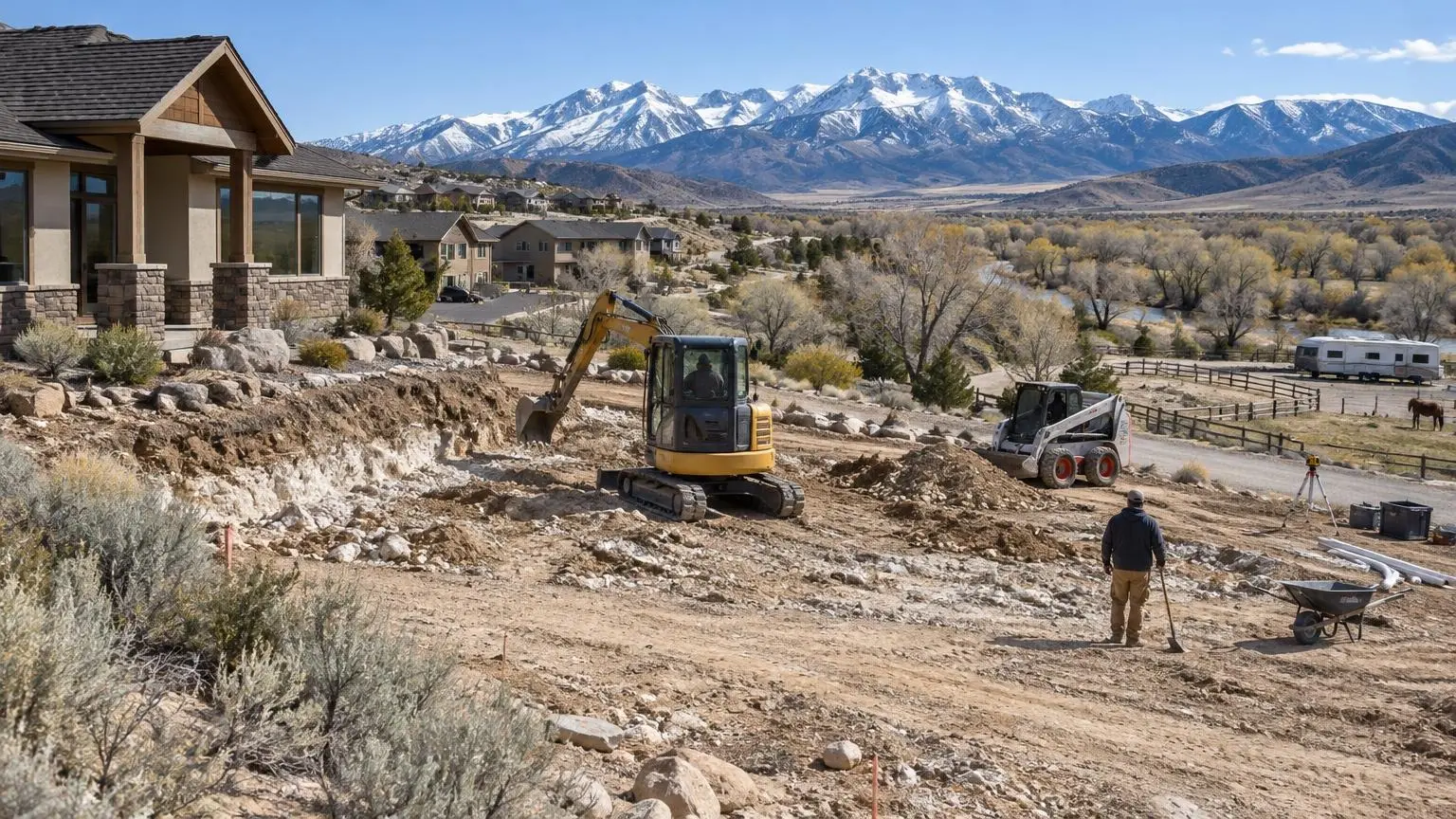
Hardpan and rock excavation is the part of Reno earthwork that blows up schedules and budgets when nobody plans for it. A cemented hardpan, often called caliche, or a layer of cobbles and boulders can stop a small excavator in its tracks. This service covers locating those layers, choosing the right equipment, breaking or ripping through them, and dealing with the oversized material that comes out.
What a duripan is
The USDA describes the Reno soil series, named for this valley, as having a duripan 50 to 100 centimeters (about 20 to 40 inches) below the surface. In the typical profile, that layer is "very strongly cemented", "extremely hard" and "extremely firm", with indurated laminae and a thickness of up to about 30 inches. Silica binds the soil grains together into something closer to weak rock than dirt. Water and roots barely penetrate it.
Rock from the mountains
Alluvial fans along the Carson Range, Peavine and the Virginia Range are built from sand, gravel, cobbles and boulders washed out of the hills over thousands of years. In those neighborhoods, a footing trench can turn up a boulder bigger than the bucket. Some of it can be reused for landscape walls or features; the rest has to be hauled.
How we get through it
- Heavy-duty rock buckets and teeth for thin or weak layers
- A ripper shank to fracture hardpan before digging
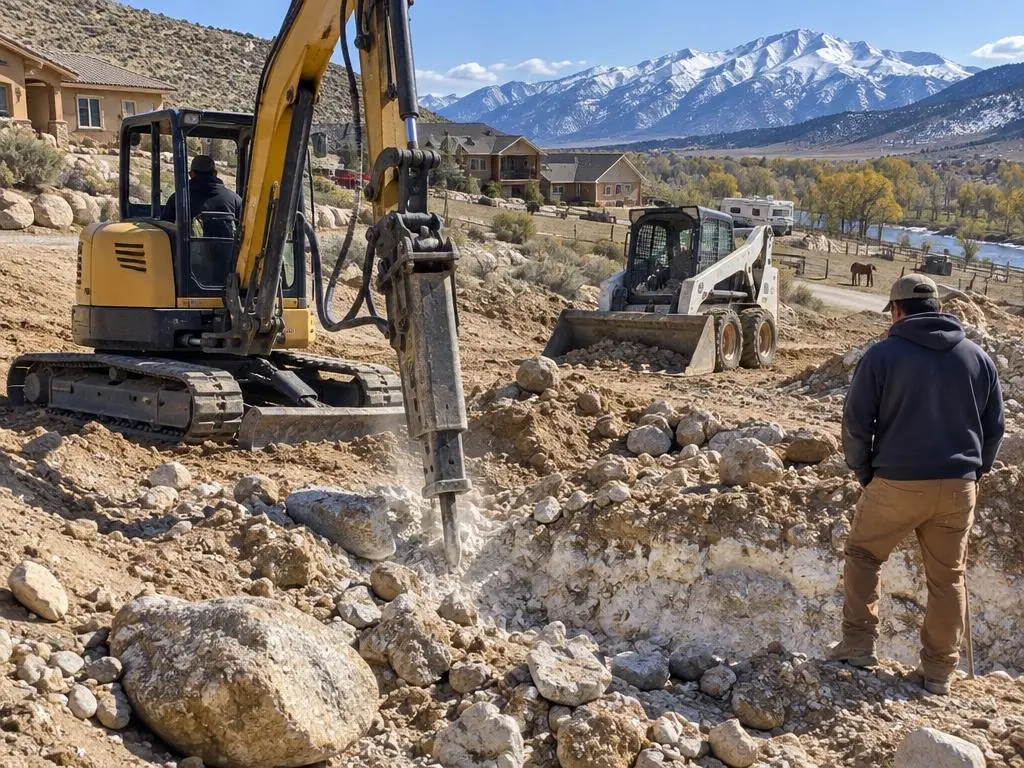
- A hydraulic breaker for thick duripan or bedrock in footings, pools and trenches
- Larger equipment when volume justifies it
Blasting is rarely needed for residential work, and it requires specialists and permits.
Why it costs more
HomeBlue Reno pricing assumes normal soft soil and notes that boulders, rock or hardpan raise the cost. HomeGuide lists jackhammered rock at $50 to $200 or more per cubic yard and warns that hitting rock during a foundation, basement or pool dig can add $15,000 to $20,000 or more. Most homeowner projects land far below that, but the risk is why we dig test holes before quoting large digs.
Planning ahead
If you are designing a pool, basement, or deep footing, a test hole before the design is finalized can save real money. Sometimes raising a floor elevation a foot avoids most of the hardpan. We share what we find so your designer can decide.
What This Covers
Hard digging for any project that has to go deeper than the topsoil.
Test holes
Quick probes to find the depth and thickness of hardpan or rock before pricing.
Ripping
A ripper shank fractures cemented layers so they can be dug.
Hydraulic breaking
Breaker hammer for thick duripan and bedrock in tight areas.
Boulder removal
Large rocks dug out, sorted for reuse or hauled.
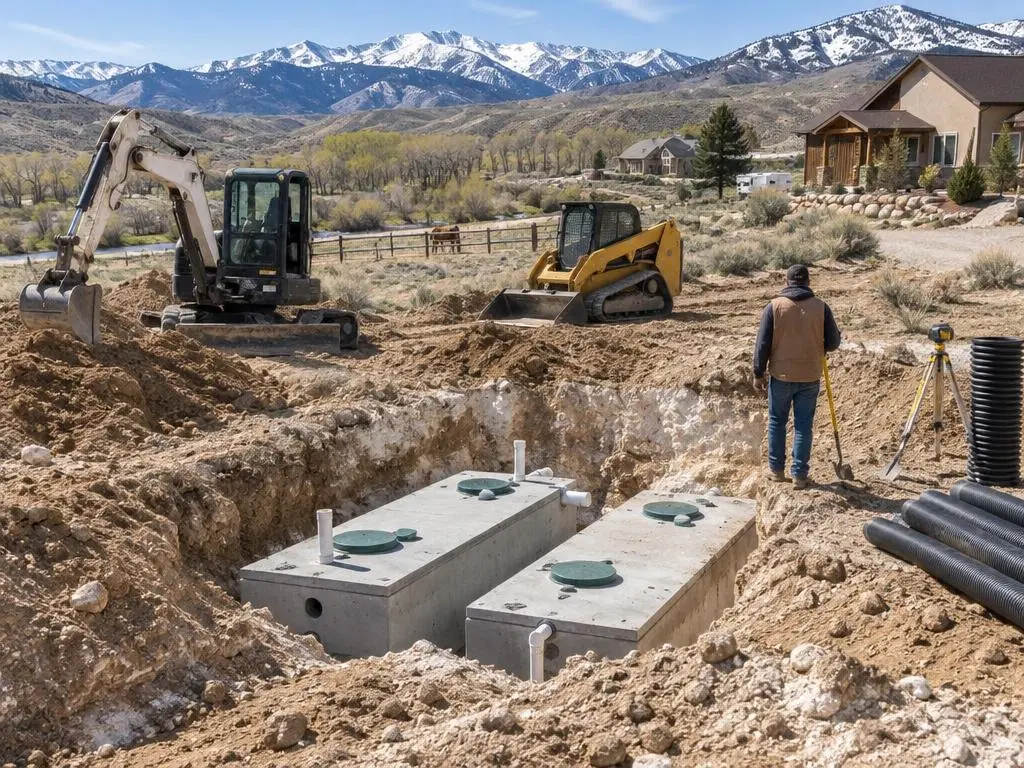
Pool and basement digs in rock
Deep excavations where hardpan or rock is expected.
Rock hauling and reuse
Oversized material stockpiled for landscaping or trucked off.
Typical Hardpan & Rock Excavation Costs
| Item | Published range |
|---|---|
| Heavy or wet soil, loose rock (HomeGuide) | $10 to $15 per cubic yard |
| Jackhammered rock (HomeGuide) | $50 to $200+ per cubic yard |
| Rock removal, overall (HomeGuide) | $1,000 to $20,000+ |
| Boulders stored on site (HomeGuide) | $50 to $200 per cubic yard |
| Rocky terrain surcharge (HomeAdvisor) | $200 to $1,200+ |
| Pool excavation, soft soil, Reno (HomeBlue) | $4,000 to $6,900 |
Published ranges from the named cost guides; HomeBlue figures are Reno-specific, the rest are national. Hardpan, rock, access, hauling and permits move the total. Your written estimate is the price.
How It Works
1. Probe
Test holes show where the hard layer starts and how thick it is.
2. Choose tools
Rock bucket, ripper or breaker, matched to what we find.
3. Break and dig
Hard layers are fractured, then excavated to the depth you need.
4. Sort and haul
Usable rock is set aside; the rest is hauled off.
Hardpan & Rock Excavation Questions
Is caliche the same as hardpan?
People use both words for cemented desert soil layers. Caliche is usually cemented by calcium carbonate; a duripan is cemented by silica, like the layer in the Reno soil series. Both dig hard.
Can you tell if I have hardpan before you start?
A test hole is the most reliable way. Soil survey maps give a strong hint, but conditions change across a lot.
Will hardpan affect drainage in my yard?
Yes. Water moves very slowly through a duripan, so it can pond above it. Planting holes and drainage pits often need to break through it.
Do you blast rock?
Not for typical residential work. Ripping and hydraulic breaking handle almost all hardpan and boulders. Blasting needs specialists and permits.
Hardpan & Rock Excavation Service Areas
- Excavation Contractors in Reno, NV
- Excavation Contractors in Sparks, NV
- Excavation Contractors in Spanish Springs, NV
- Excavation Contractors in Sun Valley, NV
- Excavation Contractors in Lemmon Valley, NV
- Excavation Contractors in Golden Valley, NV
- Excavation Contractors in Cold Springs, NV
- Excavation Contractors in Verdi, NV
- Excavation Contractors in Mogul, NV
- Excavation Contractors in Steamboat, NV
- Excavation Contractors in Washoe Valley, NV
- Excavation Contractors in Incline Village, NV
- Excavation Contractors in Carson City, NV
- Excavation Contractors in Dayton, NV
- Excavation Contractors in Virginia City, NV
- Excavation Contractors in Fernley, NV
- Excavation Contractors in Silver Springs, NV
- Excavation Contractors in Stagecoach, NV
- Excavation Contractors in Minden, NV
- Excavation Contractors in Gardnerville, NV
- Excavation Contractors in Gardnerville Ranchos, NV
- Excavation Contractors in Genoa, NV
Get a Hardpan & Rock Excavation Estimate
Free hardpan and rock dig estimates in Reno.